
IS YOUR SCAR THERAPY SAFE?

Safe Scar Therapy

Typical scar therapy ingredients include vitamin E, certain types of silicone, hydroquinone, kojic acid, preservatives, and fragrances. Multiple studies have questioned the safety of some of these ingredients and as a result, more and more people are becoming concerned about the potentially harmful substances they apply on their skin.

VITAMIN E
Vitamin E is a popular supplement. However, support has wavered. Studies show it does not lower the risk of cancer as previously thought and, more importantly, it actually increases the risk of heart failure 4. It is also popular as an antioxidant in personal care and scar therapy products. But, here too, vitamin E is being questioned because it causes contact dermatitis in up to 33% of users. For this reason, American dermatologists 5 and Canadian pediatricians 6 recommend not using vitamin E on scars.

D4 & D5 SILICONES
Many cosmetic products, such as creams, lipsticks, shampoo, soaps, antiperspirants use D4 and D5 silicones. Many topical scar treatments include some form of silicone because studies show it improves scars. The problem is, D4 and D5 are 2 of about 200 silicones that recent studies suggest may be harmful for humans and wildlife.

D4 and D5 silicones are on the toxic chemicals list of the Canadian government. Reportedly, the European Union will also require registration of D4 and D5 as potentially harmful. Tests showed that they may pose significant danger.

Environmental Defence, a Canadian environmental group, says that D4 is linked to fertility problems and liver damage, while both D4 and D5 have been linked to cancer.

Fe de Leon, a researcher with the Canadian Environmental Law Association, warns people that D4 and D5 are included in hundreds of personal-care products. "These chemicals are found to be persistent, biocumulative and inherently toxic. The chemicals have the ability to travel very long distances and have been found in sewage treatment plant effluents, landfills as well as the Great Lakes.” she said.

The Canadian government is planning to propose D4 and D5 limits in products and stricter regulation for their release into the environment during manufacturing.

"This is the first step toward regulating these harmful chemicals," Aaron Freeman, policy director of Environmental Defence, said. "We urge the government to go the distance by getting these chemicals off the market."

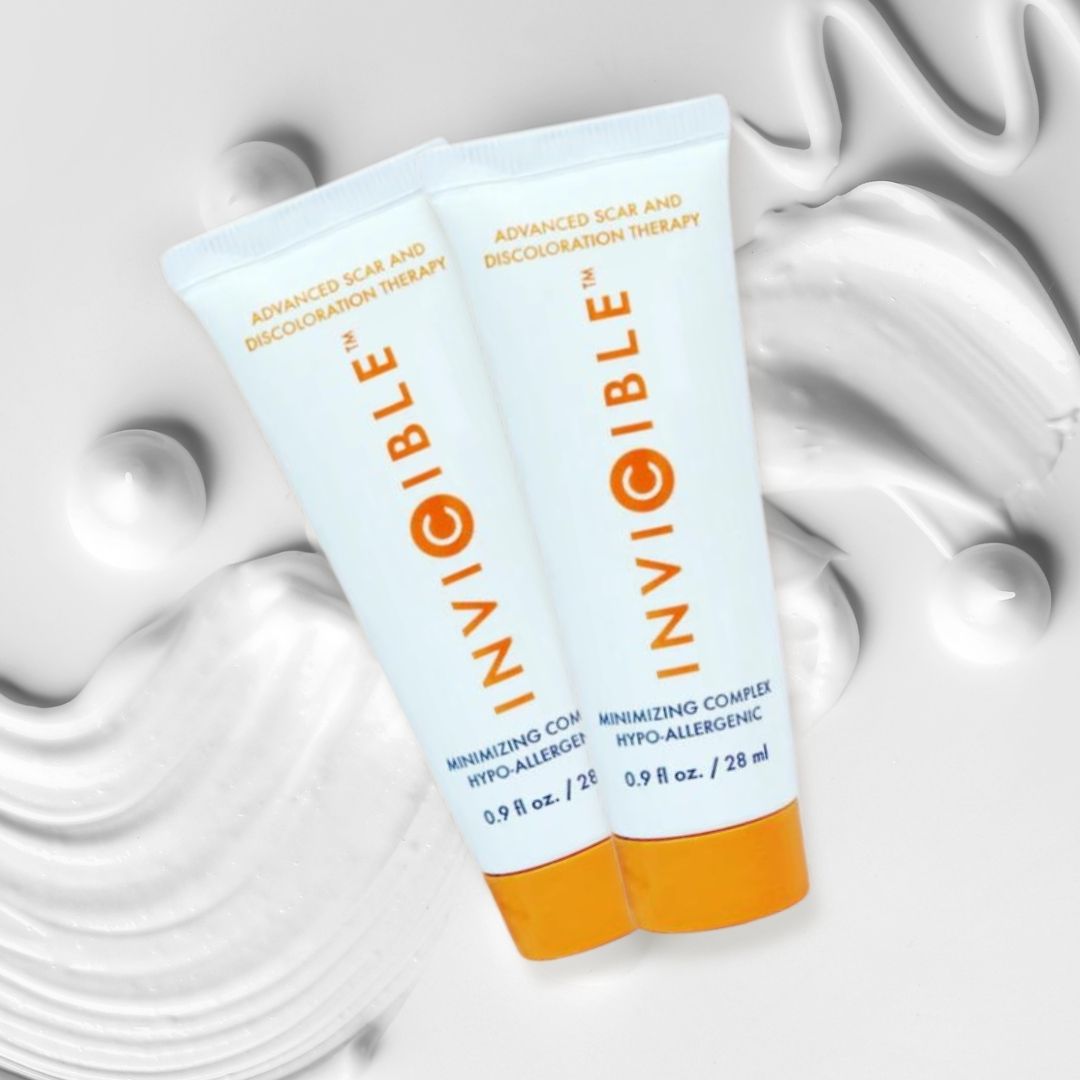
While scientific studies show the merits of silicone in terms of scar care, it is important to choose the safest form of silicone. InviCible contains Dimethicone silicone gel which has been certified as safe. It does not contain D4 or D5 silicones.

HYDROQUINONE
Though hydroquinone is an effective agent to lighten scars, it is not sold in some countries3 because of its long-term use dangers. Hydroquinone can lead to a condition called ochronosis, even at its over-the-counter strength (2%). This is permanent hyperpigmentation with sooty darkening of the skin. Ochronosis may also cause loss of skin elasticity and impaired wound healing. Other side effects include contact dermatitis (rash, redness, itching and flaking) and nail discoloration. Some researchers have questioned whether hydroquinone and related compounds may cause cancer. As a result of these fears, hydroquinone is only available by prescription in Europe and it is highly regulated in Asia. The skin-lightening effects of hydroquinone decrease with prolonged use and with sun exposure.

InviCible does not contain hydroquinone.

KOJIC ACID
Like hydroquinone, kojic acid is effective in lightening dark scars, brown spots and even melasma. Unfortunately, some studies suggest that skin exposed to kojic acid on a regular basis becomes more sensitive. Skin sensitization is bad because it can lead to allergic contact dermatitis. Like hydroquinone, kojic acid does not improve any other aspect of the scar other than the dark pigment.

InviCible does not contain kojic acid.

PRESERVATIVES, PARABENS, FRAGRANCES
Synthetic preservatives like parabens are commonly used in all kinds of personal skin care products. Preservatives prevent the growth of bacteria in products with high water content. They discourage bacterial growth and reduce the risk of infection. However, they also have a serious downside:

"Allergy to preservatives is one of the main reasons for contact eczema caused by cosmetics. As development and elicitation of contact allergy is dose dependent, the over preservation of cosmetics potentially leads to increased incidences of contact allergy," says Dr. Lundov, a prominent researcher.

There are about 50 approved preservatives to keep cosmetic products “bacteria-free”, but the market is dominated by just a handful: parabens, formaldehyde, formaldehyde releasers, metylchloroisothiazolinone, and methylisothiazolinone. That is bad news, since these chemicals may be among the most irritating preservatives.

"Approximately 6% of the general population has a cosmetic-related contact allergy mainly caused by preservatives and fragrances," says Dr. Lundov, and allergies to formaldehyde are as high as 9%1.

Most people know that parabens cause allergic skin reactions. Recent research also shows a possible association with breast cancer after finding high paraben content in breast cancer cells2. Many people are now calling for the re-evaluation of their use in cosmetic products.

InviCible is water-free and does not need preservatives. It also avoids all fragrances.

InviCible is a hypoallergenic, safe scar therapy as it avoids Vitamin E, hydroquinone, kojic acid, preservatives, fragrances and other potential skin irritants like petroleum, alcohol and mineral oil.


References:

1. Lundov MD, Moesby L, Zachariae C, et al. Contamination versus preservation of cosmetics: a review on legislation, usage, infections, and contact allergy. Contact Dermatitis 2009 Feb;60(2):70-8.

2. Darbre PD, Aljarrah A, Miller WR, Coldham NG, Sauer MJ, Pope GS. Concentrations of parabens in human breast tumours. J Appl Toxicol. 2004 Jan-Feb;24(1):5-13

3. Kooyers TJ, Westerhof W. Toxicological aspects and health risks associated with hydroquinone in skin bleaching formula. Ned Tijdschr Geneeskd. 2004 Apr 17;148(16):768-71

4. Edgar R. Miller, III, MD, PhD; Roberto Pastor-Barriuso, PhD; Darshan Dalal, MD, MPH; Rudolph A. Riemersma, PhD, FRCPE; Lawrence J. Appel, MD, MPH; and Eliseo Guallar, MD, DrPH Meta-Analysis: High-Dosage Vitamin E Supplementation May Increase All-Cause Mortality. Ann Intern Med. 2005 Jan 4;142(1):37-46. Epub 2004 Nov 10.

5. Zurada JM, Kriegel D, Davis IC. Topical treatments for hypertrophic scars. J Am Acad Dermatol 2006 Dec;55(6):1024-31.

6. Khoosal D, Goldman RD. Vitamin E for treating children's scars. Does it help reduce scarring? Can Fam Physician 2006 Jul;52:855-6.

SCAR THERAPY SAFETY | 866.967.2613 | SITE MAP | TERMS OF USE | PRIVACY POLICY

|

|

|

|

|


QUICK LINKS


Vitamin E
D4/D5 Silicones

Hydroquinone

Kojic Acid

Preservatives

Back to Top
Follow us