
Your Skincare Essential
Unlock radiant skin with InviCible Primer+™! This revolutionary formula fights aging, hydrates instantly, and absorbs quickly for refreshed skin. With hypoallergenic ingredients, it's gentle on sensitive skin.


Safe, Effective Skincare
Crafted by board-certified plastic surgeon Dr. Minas Chrysopoulo,
InviCible™ offers safe, science-backed skincare suitable for all skin
types and ethnicities. Our products are meticulously formulated with
100% pure, premium-quality ingredients.


17% Stabilized Vitamin C
Discover InviCible Primer+™: a potent 17% stabilized Vitamin C formula that enhances collagen production, shrinks pores, and delivers anti-aging benefits, resulting in smoother skin. Enjoy the convenience of a 2-in-1 anti-aging face primer and moisturizer.
InviCible Primer+™ & Dark Spot Corrector
This Luxurious formula features 17% stabilized Vitamin C to diminish dark spots, provide anti-aging benefits, and create an overall smoother appearance.
Designed to rejuvenate your complexion, this moisturizing primer illuminates the skin while effortlessly controlling uneven tone, prepping your face for a flawless matte finish.
BUY NOW


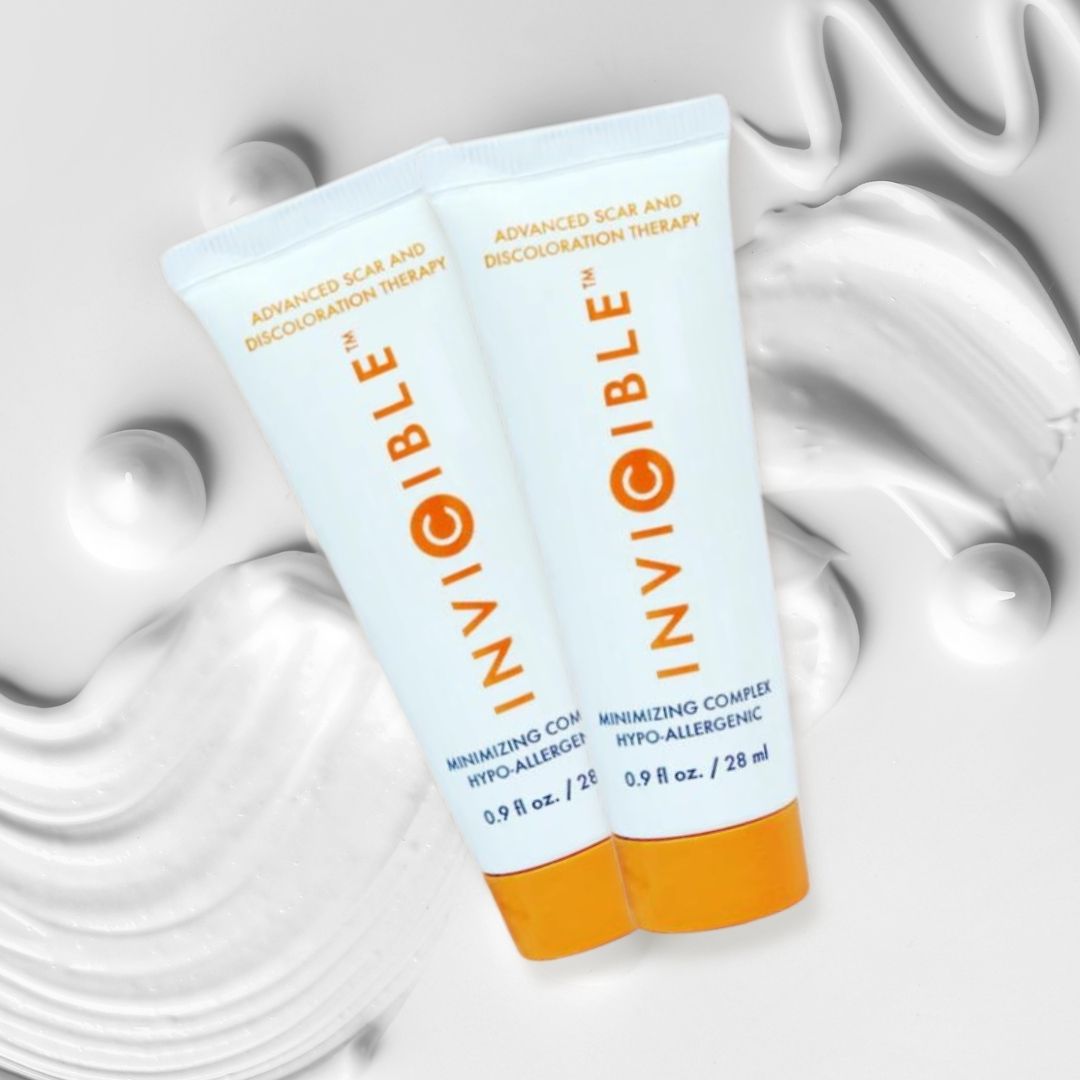
InviCible Advanced Scar & Discoloration Therapy
Formulated with a clinical-grade formula, this gentle yet potent treatment diminishes the appearance of facial scars, acne marks, dark scars, surgical scars, and other hyperpigmented blemishes.
Specifically
designed for use on the face but versatile enough for the entire body, our hypoallergenic formulation ensures safe and effective results.
"What our customers are saying ..."

It works! A little goes a long way
"It is another investment in your skin that is worth every penny! I have used the cream on my face and it really grips my makeup ALL DAY - and the feel of it is so smooth and silky. I feel that I don't need an extra moisturizer and it is very light under my makeup."
— Ray LB


I am floored and so excited
“I have to tell you that I ordered Invicible and I’m not cleared to use it on my incisions yet (surgery 4/1), but I tried it out on a long/standing brown spot on my face yesterday (likely from sun or age damage) and it is GONE today. GONE! I am floored and so excited to spread the good news and recommendations to others! Ordering some more for when I can use on scars right now!"
— Amy S. H.


Bumps and Red Spots
"I wanted to see what my wife’s InviCible treatment cream would do to my ingrown hair problem… I now use it all the time. I’m not one to go on about products, but the stuff’s amazing. The bumps and the red spots go away in a day or two, instead of taking 4 or 5 days to heal."
— Ulrich S









Say YES to Safe & Healthy Skincare!
Dr. C originally developed InviCible Skincare as a post-surgical scar treatment for breast cancer survivors.
Patient feedback revealed that beyond its intended purpose, the formula had additional rejuvenating benefits, particularly for facial skin.
The silky sheer lotion instantly smoothed complexion texture, acting almost like a blur effect. This dual action not only created an invisible canvas for flawless makeup application but also extended the wear of foundation and other cosmetics.
Patients found it versatile enough to
use under any daily skincare regimen, with many opting to make it their sole daily product. Thus, InviCible Primer+™ was born!






Stay Connected
Learn more about skincare, health and wellness every week.


Harnessing the Power of Vitamin C for Scar Management